Stump grinding vs stump removal: what’s the difference?
Stump grinding chips a stump down 4 to 12 inches below grade and leaves the root system in the ground to rot. Stump removal digs the stump and its whole root ball out with an excavator, then backfills the hole with clean soil. Grinding is cheaper and faster. Removal is what you want before building, pouring, replanting, or anywhere buried rotting wood will become a problem.
At Watson Outdoor Living we do the second one. We dig stumps out whole with the CAT 308 and haul them off; we do not grind. That gives us a bias worth admitting up front, so this guide draws the line honestly, because grinding really is the right call for plenty of yards.
What is the actual difference?
A grinder works from the top down. Its cutting wheel turns the visible stump into a pile of chips, working a cylinder about as wide as the stump and a foot or so deep. Everything outside that cylinder stays: the taproot, the lateral roots running out under the lawn, all of it. University of Georgia forestry work models the root system as a wide, shallow saucer many times bigger than what the grinder touches.
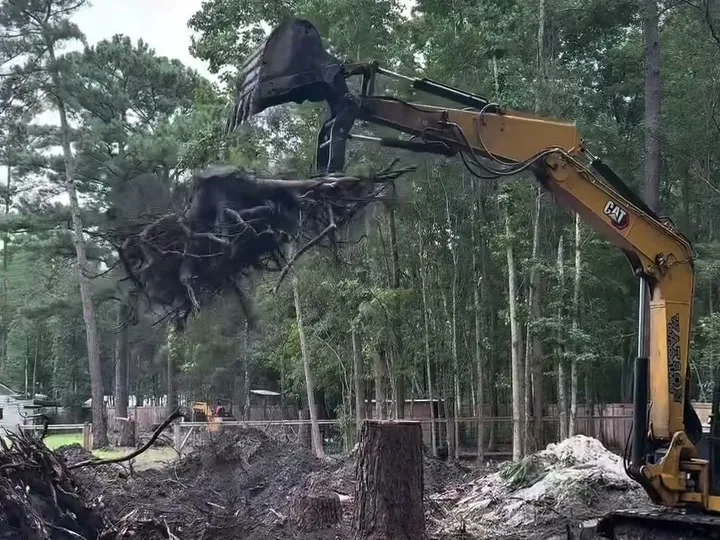
An excavator works from the side. It digs around the stump, breaks the laterals, and lifts the stump and root ball out in one piece. The stump leaves the property, the hole gets backfilled and compacted, and the spot is clean mineral dirt.
| Grinding | Full removal | |
|---|---|---|
| Roots | Stay in the ground | Come out with the stump |
| Left behind | Chips and sawdust mixed in soil | Backfilled, compacted hole |
| Typical published cost | $150 – $500 per stump | Roughly 2 – 3x the grind price |
| Time on site | 1 – 3 hours | About half a day |
| Lawn disturbance | Low | Higher, then repaired |
| Build or pour over | Not reliably | Yes |
| Replant the same spot | Wait years | Right away |
| Regrowth risk | Live roots can sprout | Gone with the roots |
When is grinding the right call?
A single ornamental stump in a finished front yard, no plans to build or replant on the spot, and a budget to respect: grind it. The machine gets in without tearing up the lawn, the stump disappears from view in an hour or two, and the price is the lowest on the menu. If that is your situation, a grinding outfit will treat you right, and we will tell you exactly that on the phone.
The catch is what grinding leaves behind, and it shows up over years, not weeks. The buried wood keeps decaying, and as it goes the ground sinks. UGA’s forestry school calls the result a stump caldera: the spot keeps settling as root channels collapse, and it needs topping up with new soil for years. Decay near driveways and structures can even call for soil stabilization. Grass over a ground stump also struggles at first, because chips tie up the nitrogen as they rot.
When does full removal earn its price?
Anything getting built or poured. Georgia’s residential code requires the area inside foundation walls to have all vegetation, topsoil, and foreign material removed, and fill to be free of vegetation. Buried chips and a rotting root ball are exactly that material. Slabs, additions, garages, driveways: if concrete is going over the spot, the wood has to come out or the pour settles into the voids the wood leaves behind. This is the clearest case, and it is not close.
Sprouting species. Pines will not come back after grinding; the U.S. Forest Service classifies loblolly as a species that simply does not sprout from stumps or roots. Sweetgum is the opposite: it can push 40 or more stems off one parent root system, and most sweetgum stands in Georgia bottoms started exactly that way. Maple, elm, privet, and chinaberry sprout too. Grind a sweetgum and you trade one stump for a yard full of shoots that only removal or repeat cutting ends.
Termite country, close to the house. Georgia sits in the heaviest termite pressure zone the pest maps draw, and a moist rotting stump is a standing food supply. UGA’s entomologists have described thousands of termites feeding on a single stump a few feet from a home. Removal takes the food source out of the ground instead of burying it.
Replanting the same spot. A new tree cannot root through a plug of decaying chips. After a dig-out, the hole is open native soil and you can plant the replacement immediately instead of waiting years.
Whole-property work. If we are already on site for land clearing or tree removal, digging the stumps while the excavator sits there is the cheap version of removal. Bundled stumps price far below a standalone visit, which is worth knowing before you clear now and deal with stumps later. The cost guide shows how grubbing prices at acreage scale.
What does each one cost?
Published national ranges put grinding around $150 to $500 for a typical stump, with per-inch pricing of a few dollars per inch of diameter, and full excavation at roughly two to three times the grind price plus backfill. Savannah-area guides run in the same bands. The sources disagree with each other more than they admit, so treat all of it as ballpark.
The honest math is total cost of ownership. Grinding is the cheaper line item. Removal is the cheaper outcome when the alternative is grinding today, then paying again later to dig out the same spot for a slab, a replacement tree, or a settling repair. Pay once for the finish you actually need, the same logic as the mulching versus clearing decision.
How we do stump removal in Statesboro
Our stump removal jobs run the same way every time: the CAT 308 digs the stump and root ball out whole, the mass gets loaded and hauled off, and the hole gets backfilled and leveled so you can mow over it next week. Sandy Bulloch County ground digs clean, which keeps the work quick even on big pine taproots.
If you have a stump in the way, call or text Watson Outdoor Living at (912) 712-6034 or request a free estimate. If grinding is genuinely the better fit for your job, we will say so and you will have lost nothing but a phone call.