
Forestry mulching vs land clearing: which one does your property need?
Forestry mulching grinds standing brush and small trees into a mulch layer in one pass and leaves stumps at grade. Traditional land clearing digs stumps and roots out and hauls or burns the debris, leaving bare, workable dirt. If you are building on the ground, you need clearing. If you need the land open, usable, and looking right, mulching usually wins on cost.
We run both services around Statesboro with the same two machines, so we have no horse in this race. The honest version of the comparison looks like this.
What each method actually does
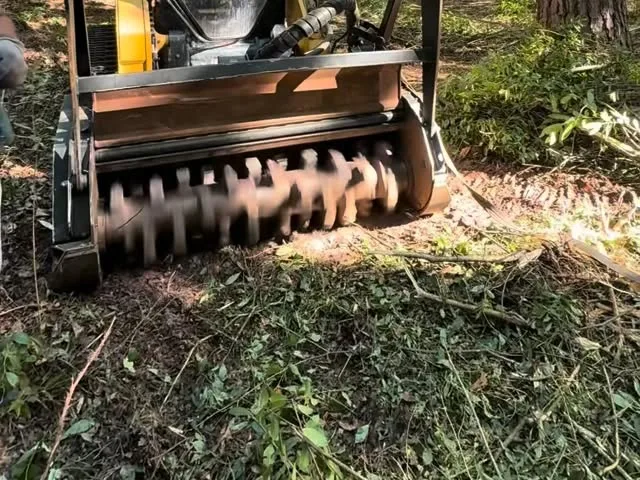
Forestry mulching puts a grinding head on a track loader. The machine drives up to standing brush and trees and turns them into chips where they stand. Nothing gets piled, burned, or hauled. What is left is a layer of mulch over the whole area, stumps ground level with the dirt, and every mature tree you wanted kept still standing.
Land clearing removes vegetation entirely. Trees come down, brush gets piled, and on a full clear-and-grub job the excavator digs out the stumps and root balls. Debris either burns under a Georgia Forestry Commission permit or leaves on a trailer. What is left is open dirt that can be graded, compacted, and built on.
| Forestry mulching | Land clearing | |
|---|---|---|
| Best for | Overgrown lots, pasture reclaim, hunting land, fence lines, privacy, trails | House pads, shops, barns, septic, driveways, ponds |
| Georgia cost guides | $1,200 – $3,000 / acre | $3,000 – $8,000+ / acre full clear |
| Debris | Stays as ground cover | Piled, burned, or hauled ($500 – $2,000 / acre) |
| Stumps | Ground to grade, roots stay | Dug out and gone |
| Ground after | Mulch blanket, erosion protected | Bare dirt, ready to grade |
| Build on it | No | Yes, after grubbing and grading |
Which one does your goal call for?
The machine is the wrong place to start. Start with what the land is for.
Building anything. House, shop, barn, septic field, driveway: that footprint needs land clearing with the stumps grubbed out. Georgia’s residential code requires all vegetation and foreign material removed inside foundation walls, and a mulched surface fails that test by definition. There is no honest way to mulch your way to a pad.
Getting overgrown land back. A lot that has gone to yaupon, briars, and volunteer pine wants forestry mulching. One machine opens it up, the mature oaks and pines you like stay standing, and the mulch keeps the dirt from washing while the ground recovers.
Pasture and hunting land. Mulching handles reclaim work and it is the standard tool for shooting lanes, food plot edges, and access trails. One caution from the mowing side: stumps at grade are hard on bush hogs and hay equipment, so ground you plan to mow on a cycle may justify digging the stumps even without a building. That is a judgment call we make with you at the property.
Selling raw acreage. Mulching is the cheapest way to make land walkable and photographable so a buyer can see what they are buying. Grubbing to build-ready only pays if you are marketing a build-ready lot.
Most real jobs: both. The pattern we see around Bulloch County is a hybrid. Mulch the bulk of the acreage for cost and erosion control, and clear-and-grub only the footprint that gets a structure or a drive. You pay build-ready prices only where build-ready matters. The full cost picture for both methods is in our Georgia land clearing cost guide.
What grows back after mulching?
The honest answer: some of it, eventually. The mulch layer blocks sunlight to the seed bank for a year or more, and green ground cover starts returning within weeks of the job. What matters is what the stumps do, and that is species by species. Loblolly pine, sweetgum, and privet will not sprout back from a mulched stump. Maple and oak can sucker from live roots. Around here the usual returnees are privet, briars, and volunteer sweetgum coming up new.
So treat mulching as a reset, not a permanent kill. A light maintenance pass every year or two keeps a mulched property open for a fraction of the original cost. If a salesman tells you one pass lasts forever, he is selling. If you want the roots actually gone, that is a stump removal job, and our guide on grinding versus removal explains when it is worth it.
Where each method hits its limits
Mulcher heads have a size ceiling. Ours runs efficiently up to roughly 8 inch trees; bigger stems get felled first and then processed, which adds time. A stand of mature 16 inch pines is a tree removal job with mulching cleanup behind it, not a mulching job at mulching prices. Mulchers also hate hidden metal, old fence wire, and trash piles, which chew up teeth and slow everything down.
Clearing’s limit is disturbance. It strips the ground cover, so bare dirt needs erosion control and eventually grading, and near creeks and wetlands the lighter footprint of mulching is often the method that keeps you out of permit trouble. Georgia keeps a 25-foot undisturbed buffer on state waters either way.
The short version
If something is getting built on it, clear it. If you need to use it, see it, or walk it, mulch it. And if the job is really both, split the property and pay for each finish only where it belongs.
We look at every property before quoting either service. Call or text Watson Outdoor Living at (912) 712-6034 or request a free estimate, and we will tell you which method your land actually calls for, including when the cheaper one is the right answer.