
Stump Removal Cost in Georgia: Published Prices to Dig Out or Grind a Stump
Angi’s stump removal guide, updated Sep 14, 2026, puts the national average at $369. That number comes from 16,293 verified projects, and most homeowners pay between $195 and $609. HomeGuide lists $100 to $400 on average, depending on size, diameter and method.
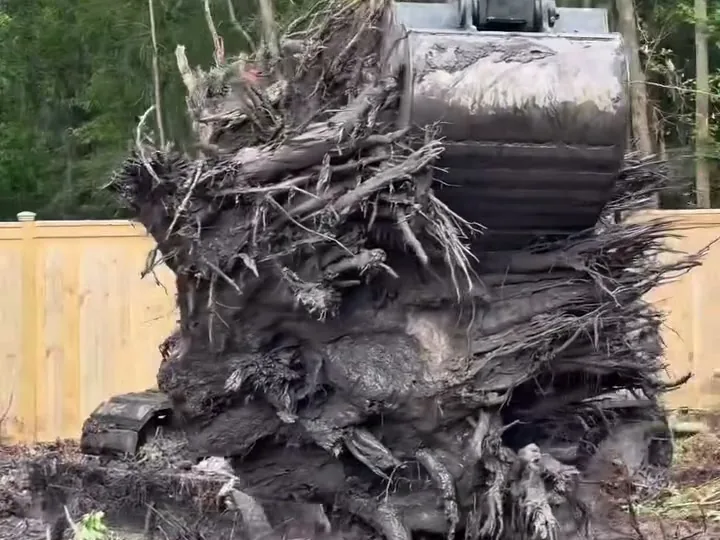
We dig stumps out whole with a CAT 308 excavator, and we never grind them. HomeGuide calls grinding the most common removal type, so the ranges below cover both methods. Our stump removal with the excavator gets priced after we see the stump, and that estimate is free.
What does each stump removal method cost?
Angi and HomeGuide publish separate ranges for each method. Every row below names its source.
| Method | Published cost range | Source |
|---|---|---|
| Manual removal, stump and roots dug out | $200 to $700 per stump | Angi |
| Digging up with a backhoe | $80 to $190 per stump | HomeGuide |
| Backhoe minimum service fee | $150 to $350 | HomeGuide |
| Stump grinding | $150 to $500 per stump | Angi |
| Stump grinding, first stump | $120 to $400 | HomeGuide |
| Stump grinding, each additional stump | $30 to $60 | HomeGuide |
| Grinding by diameter | $2 to $6 per inch, $80 to $160 minimum | HomeGuide |
| Grinding a huge stump | $300 to $800 | HomeGuide |
| Chemical rotting | $100 to $200 per stump | HomeGuide |
| Burning out | $50 to $200 per stump | HomeGuide |
| Tree root removal | $150 to $300 | HomeGuide |
Read the two digging rows together. HomeGuide’s $80 to $190 per stump sits under a $150 to $350 minimum for backhoe work. On a single stump, the minimum can be the number you pay.
Angi’s manual removal line covers digging out the stump and its roots. Angi calls it the most expensive method and also the cleanest. Stump grinding goes four to six inches below ground, Angi says, and leaves the roots intact.
What moves the price of one stump?
Width comes first. Angi says pricing typically runs $2 to $5 per inch of diameter. Its size chart puts a 24 inch stump at $48 to $120. HomeGuide says to measure the base of the stump, anywhere it comes out of the ground.
Small stumps have their own line. HomeGuide puts grinding a bush stump 3 to 6 inches wide at $12 to $24, with $80 to $160 minimums. For overgrown shrubs near the house, our bush removal pulls the root ball out too.
Species comes next. Angi says dense hardwoods such as oak, hickory and walnut take longer and cost more. HomeGuide says hardwood stumps have higher rates than young softwood stumps. Its land clearing guide counts pine among the softwoods.
Around Statesboro, planted loblolly and slash pine stand over sweetgum, and hardwoods fill the creek bottoms. The big pine stumps we dug out for a local tree company came up whole with the excavator.
Age cuts the other way. Angi says older, decaying stumps are easier and faster to remove than newer ones.
Soil and access round out the list. HomeGuide says removing stumps in rocky or clay soil takes longer. Angi says soft, loose soil speeds up the process. Ground here runs to sandy loam and loamy sand over clay, and low bottoms hold water after rain.
HomeGuide adds that stumps between buildings or near power lines need extra safety precautions and cost more in labor. Angi says steep hills and rugged terrain make it harder to get equipment to the site.
Is it cheaper to remove several stumps at once?
Per stump, yes. Angi says most pros charge a $100 to $150 minimum per stump for a single callout. With more than one stump, Angi says that rate often drops to $40 to $75 per stump.
Grinding prices fall the same way. HomeGuide puts the first stump at $120 to $400 and each additional stump at $30 to $60. On a dig, five stumps at $80 to $190 each already pass the top of HomeGuide’s backhoe minimum.
HomeGuide says most companies offer tree and stump removal as separate services. It puts the two together at $380 to $2,300 on average. Our tree removal brings the stump out with the tree. For the tree side of that range, see our Georgia tree removal price guide.
A lot covered in stumps and brush is a bigger job. That work falls under clearing a whole lot of stumps and brush.
What extra costs do people forget?
The hole is the big one. HomeGuide says excavation leaves a large hole, so backfilling with new dirt costs extra. It puts topsoil at $10 to $50 per yard for filling holes from large trees.
Grinding leaves a pile of its own. HomeGuide says removing the mulch after grinding costs $2 to $4 per inch of stump width. Angi says you can fill the hole with the stump chips or with soil.
Roots are their own line. HomeGuide puts tree root removal at $150 to $300. It says roots under foundations, driveways, sidewalks or near utility lines cost more in labor.
Cleanup comes last. Angi says cleanup and debris hauling adds $1 to $4 per diameter inch. In Bulloch County, the convenience centers take household waste from county residents only.
Commercial contractors are barred from dumping at those centers. Stumps from a job go to a disposal site that takes contractor loads. The stumps we dig leave the property on our dump trailer.
Then comes the lawn. HomeGuide lists seeding at $0.04 to $0.18 per square foot and sod at $1 to $2 per square foot. It also notes that a dug-out stump takes lots of topsoil to level the yard. When several stumps come out of one lawn, leveling the whole yard can be the cleaner finish.
What do the DIY routes cost?
Renting a machine is the first route. HomeGuide’s rental table lists a stump grinder at $100 to $400 a day. A mini excavator runs $250 to $500 a day, and a tractor loader backhoe $225 to $700. For only a few stumps, HomeGuide says doing the job yourself costs more than hiring a professional.
Georgia 811’s rule is short: contact 811 before you dig. The service is free of charge.
Chemicals are the slow route. HomeGuide puts chemical stump removal at $100 to $200 per stump, and DIY stump killer alone at $15 to $60. The treatment kills the stump in 4 to 6 weeks, then the wood takes months to decompose. HomeGuide notes that chemical rotting is not permitted by all county laws.
Burning runs $50 to $200 per stump, HomeGuide says. The burn takes 6 to 12 hours, or up to 7 days for stumps wider than 12 inches. Angi says many cities prohibit chemical rotting and stump burning.
Georgia adds a step before any fire. The Georgia Forestry Commission says no permit is required for hand-piled yard debris, meaning leaf and limbs only. A stump is not on that list, so call 1-800-GA-TREES (428-7337) before you light one.
Leaving the stump costs nothing today. HomeGuide says a stump takes 3 to 10 years to rot completely.
When is digging a stump out worth the money?
Plan a slab, a driveway or a building pad on the spot, and the roots have to go. HomeGuide says total tree root removal is mandatory before site construction begins. A fence line or a new bed across the spot is a smaller version of the same case.
Replanting is another case. HomeGuide’s grinding guide says you can’t replant a new tree over a ground stump. It lists room for a new tree as a plus of digging.
Sweetgum is the sprouting hardwood to watch here. The Forest Service says sweetgum can sprout until it is about 50 years old. Its sprouts often reach 4.5 feet in one growing season. HomeGuide says grinding doesn’t stop sprouting from some hardy underground roots.
University of Georgia entomologist Brian Forschler has said that termites tunneling through the ground like to follow roots. Those roots can lead them right into a home. His advice on stumps in the lawn was short: get rid of them. HomeGuide counts no dying roots left to attract pests as a plus of digging.
Our guide to grinding versus digging out weighs the two methods side by side. A lone stump in open lawn, with nothing planned for the spot, is where grinding’s lower price holds up.
How do you get a price on your stump?
Every estimate starts with a look at the stump in person, and it is free. Count your stumps and measure the widest one at ground level. Tell us what goes on the spot next, since a slab and a lawn need different finishes.
Call or text (912) 712-6034 to set a time, or tell us about your stumps online. You can also read how a stump dig-out works from start to finish before we come out.