Do you need a burn permit in Georgia?
Not for leaves and limbs you piled by hand. Since July 1, 2021, that pile needs no permit and no call to the Georgia Forestry Commission. Safety rules and local ordinances still apply. Land clearing, storm debris, farm and forestry burns still need the Forestry Commission first.
That call goes to 1-800-GA-TREES (428-7337), or you can apply online. A permit is good only for the day it is issued. Inside Statesboro city limits, the city wants its own permit for any outdoor burning.
What can you burn in Georgia without a permit?
Senate Bill 119 changed GA code 12-6-90. It removed the need to notify the Forestry Commission before burning hand-piled natural vegetation or yard debris. The no-permit rule covers leaf and limbs only. A stump or a pile a machine pushed up falls outside it.
The state still sets safety rules for that pile. The Forestry Commission sums them up as S-S-T-A-R:
- Space: 25 feet or more between the fire and woodlands.
- Space: 50 feet or more between the fire and structures. That includes homes, outbuildings, sheds and barns.
- Time: burn between sunrise and sunset.
- Attendance: the person responsible stays on site until the fire is out.
- Reasonable precautions: a continuous pressurized water source on site is one example. A bare soil barrier and a rake or shovel count too.
Only natural vegetation from the property goes in the fire. Burning household garbage, lumber or plastic is unlawful. Debris also cannot be hauled to another site and burned there. Once it moves, the state treats it as solid waste.
Which burns still need a permit or a call?
Four kinds of burns still go through the Forestry Commission. They are agriculture, silviculture, land clearing burns and vegetative storm debris. Each needs notification, a burn permit, or both. The permit is free and covers only the day it is issued.
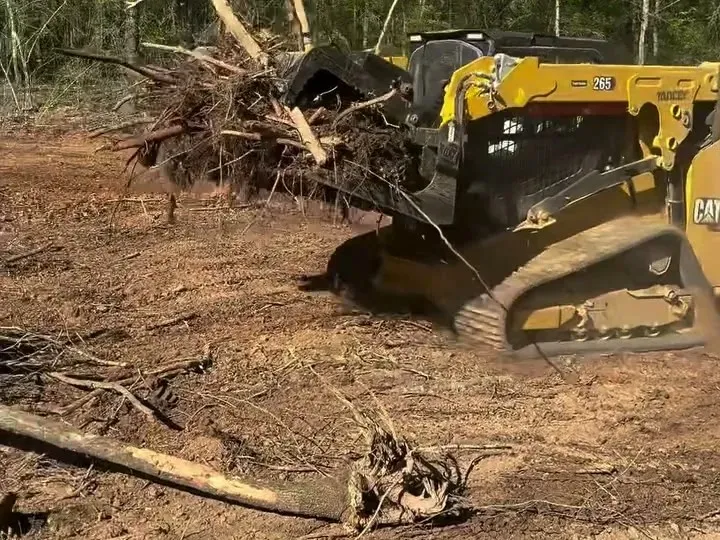
Land clearing is the case to watch. Machine work leaves a pile that falls outside the hand-piled rule. That pile is why land clearing jobs near Statesboro start with a plan for the debris. Here is how the common burns line up.
| What you are burning | Permit or call? | Key rules |
|---|---|---|
| Leaves and limbs piled by hand | No state permit or call since July 1, 2021 | 25 feet from woods, 50 feet from structures, sunrise to sunset, stay with the fire |
| Yard debris inside Statesboro city limits | Free city permit from the Fire Department | Leaves, pine straw and dead limbs only, 10 AM to 6 PM or sundown |
| Vegetative storm debris | Forestry Commission notification or permit | Good only for the day it is issued |
| Land clearing debris piled by machine | Forestry Commission permit, under EPD land clearing rules | 1,000 feet from occupied structures, plant growth only, one 60 by 60 foot pile per 9 acres |
| Clearing debris in an air curtain destructor | Forestry Commission permit. Some counties require this method | 300 feet from occupied structures and public roads, not lit before 10:00 a.m., out one hour before sunset |
| Farm and forestry burns | Forestry Commission notification or permit | Good only for the day it is issued |
| Household garbage, lumber or plastic | Not allowed | Unlawful in Georgia all year |
What are the rules for burning land clearing debris?
The state calls burning machine-cleared debris a land type change. That puts the pile under the EPD land clearing rules. EPD files it as Burn Type 11, for land clearing, construction and right-of-way maintenance. Its conditions are tight for a rural lot.
- The burn sits at least 1,000 feet from any occupied structure, unless EPD approves less.
- Prevailing winds blow away from most of the area’s population.
- The amount of dirt on or in the pile is kept low.
- Only plant growth burns. Heavy oils, asphalt and rubber stay out.
- No more than one pile 60 feet by 60 feet burns within a 9-acre area at one time.
A thousand feet is a long way on a small tract. A house next door can sit closer than that. Depending on the county, machine-piled debris may also need an air curtain destructor.
That method is Burn Type 13. The unit sits at least 300 feet from any occupied structure or public road. It cannot be lit before 10:00 a.m., and the fire must be fully out at least one hour before sunset. Only trees, logs, large brush and stumps relatively free of soil go in. The permit for the clearing itself is a separate question, covered in our guide to land disturbance permits.
Can you burn storm debris?
Storm debris has its own EPD category, Burn Type 8, for vegetative debris from storms. The Forestry Commission wants notification or a permit before it burns. The pile also has to burn where the storm dropped it. Debris hauled in from another site cannot be burned.
On our storm jobs, you choose where the debris goes. The dump trailer can haul it off the property. Or the crew stacks one burn pile away from the trees with a cleared dirt break around it. You make the Forestry Commission call and tend the fire. That is how fallen tree and storm debris cleanup runs when burning fits.
When is burning banned in Georgia?
Georgia has one ban every summer and others that follow the weather. The EPD summer ban runs from May 1 through September 30. It covers 54 counties, many of them in north and central Georgia. It has been in place every summer since 2005.
That ban stops citizens and businesses from burning yard and land clearing debris. Campfires and grilling are exempt. Bibb County is on the list. A land clearing job around Macon cannot burn its debris from May through September. None of the 13 counties we cover around Statesboro is on it.
Drought bans are separate from the summer ban. On April 22, 2026 the Forestry Commission issued its first mandatory ban on outdoor burning. It covered 91 counties across the lower half of the state, all of southeast Georgia included. It ended May 12. Burning household garbage stays banned statewide all year.
What do Statesboro and Bulloch County add?
Local burning ordinances may be stricter than state law, and these are. Inside Statesboro city limits, the city prohibits outdoor burning without a permit. There is no charge for it. Fill out the city’s online form or call the Fire Department at (912) 764-3473. Someone from the department comes to the location and decides whether a permit can be issued.
The city rules go past S-S-T-A-R. Burning is limited to leaves, pine straw and fallen dead limbs. Fires burn from 10 AM to 6 PM or sundown, whichever comes first, and must be out by then. The pile sits 50 feet from all structures and 10 feet from property lines, with a working water hose nearby.
Outside the city, Bulloch County can ban burning when drought sets in. Commissioners banned all open burning of yard debris in unincorporated areas twice in 2026. The first ban ran April 22 through May 12. The second took effect August 1 and was lifted September 1. Neither ban barred controlled farm or forestry burns under a state permit. Violations could bring up to a $1,000 fine, 60 days in jail, or both.
Other towns in our area set their own rules. EPD recommends checking with your local fire marshal before any burn. Outside Statesboro, check with the city or county before you burn.
What happens if a burn gets away from you?
The bill can arrive after the smoke clears. Unlawful Burn Notices may be issued if a burn breaks GA code 12-6-90 and a wildfire results. Suppression charges may apply too. Charges can also follow when reasonable precautions were not taken.
Weather is the easiest thing to check. The Forestry Commission says to skip days rated class 4 or 5 for fire danger. Low humidity and high wind are warning signs too. Look up the fire danger rating for your area the morning you plan to burn.
How do you skip the burn pile?
Forestry mulching leaves nothing to burn. The mulcher head on our track loader grinds brush where it stands. The chips stay on the ground as cover. Mulching a lot instead of piling it takes the burn permit question off the table.
Hauling is the other route. Logs and brush leave on the dump trailer. EPD lists commercial grinding and composting operations and inert landfills as places debris can go. Stumps leave the same way after digging them out by the root ball with the excavator.
Every job starts with a free estimate at the property. We size up the debris and where a pile could sit, then you choose how it leaves. Call or text (912) 712-6034, or tell us about your property and we will get back to you.